Home Important dates Registration Program Lecturers Participants Projects Teams Prizes Venue Supporters History Contact Photos
LOGO

About

UVT
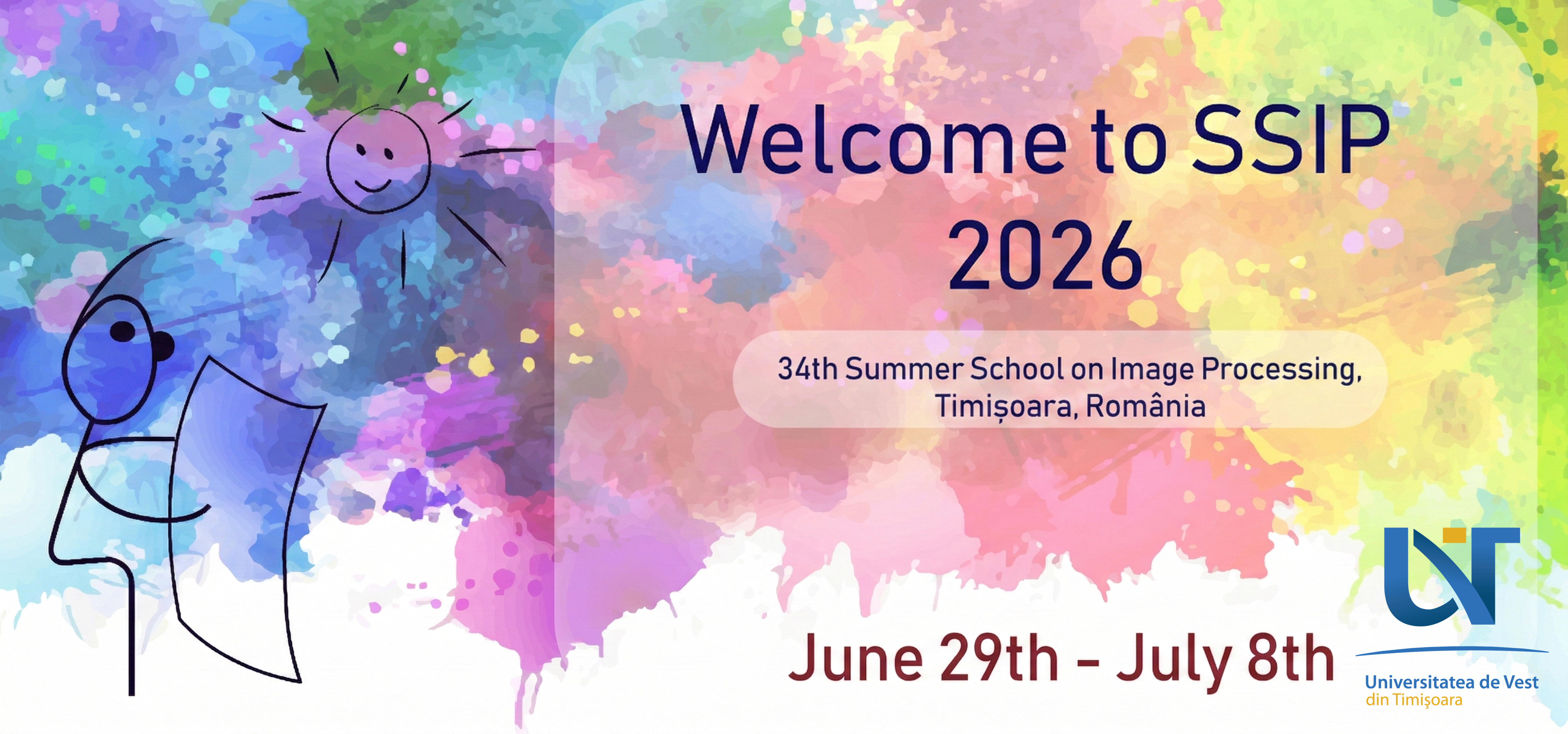
The 34th Summer School on Image Processing is a traditional event, organized yearly with the aim of offering to students interested in image processing, particularly master and PhD students, the opportunity to attend lectures given by experts in the field, to work in international teams on exciting projects and to present their own results related to image processing and computer vision.

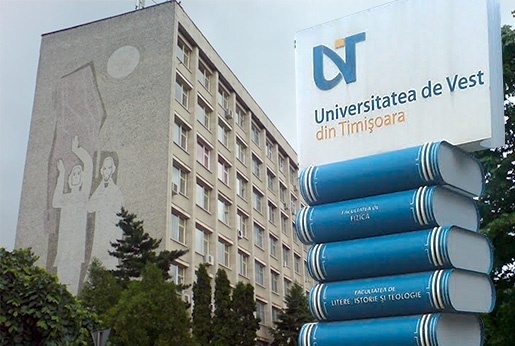
SSIP 2026 will be held from June 29th to July 8th at the Faculty of Computer Science from the West University of Timisoara, Romania.

The SSIP programme is structured such that besides attending lectures, usually in the morning, the students also work in international teams on a project assignment, usually in the afternoon. The projects are evaluated by a committee of lecturers. The students interested to present their own work on related topics can do this in a special session organized in the end of the summer school.

All participants will receive an attendance certificate stating their participation at lectures, at team project activity and passing the final test. Participation at SSIP is recognized by several universities as a special PhD course.

Important dates

Deadline for application: June 10, 2026

Notification of acceptance: June 12, 2026

Payment of registration fee: June 15, 2026

Summer School: June 29 - July 8, 2026

Registration

The registration fee is 150 euro and it covers:
  • attendance at the summer school;
  • participation kit;
  • coffee, tea and snacks during the breaks;
  • participation at the gala dinner;
  • lunch;
  • accommodation in student hostels.
Registration steps:

Step 1: Apply for SSIP 2026 by filling in the Application form (click here)

Step 2: Pay the registration fee to Institute e-Austria Timisoara (details will be provided)

Accommodation

Participants can arrange the accommodation by themselves. A limited number of rooms in student hostels are available (no fees).

Program

TBA
×

László Czúni: Learning-based Metrics for Object Recognition

Optical object recognition is a fundamental task in computer vision. This lecture provides an overview of object recognition and detection, tracing the evolution from early handcrafted methods to today's advanced learning-based and multimodal models. Special emphasis is placed on metric learning as a key approach within modern recognition systems. The session concludes with a case study demonstrating a multimodal technique for enhancing medical pill recognition by integrating visual features with descriptive textual information.

×

Attila Fazekas: Classification Algorithms in Digital Image Processing

This lecture provides an overview of the main classification approaches used in digital image processing, starting from classical machine learning techniques and progressing toward modern deep learning methods.

The presentation introduces the general image classification pipeline, including preprocessing, feature extraction, supervised learning, and performance evaluation. Classical approaches such as k-Nearest Neighbors, Support Vector Machines, Decision Trees, and Random Forests are discussed together with traditional feature descriptors. The lecture then presents the fundamentals of deep learning-based image classification, with particular emphasis on Convolutional Neural Networks and transfer learning techniques.

Special attention is given to practical applications in medical imaging, industrial inspection, and computer vision systems, as well as to important challenges including noise, class imbalance, interpretability, and robustness. The lecture aims to provide participants with both conceptual understanding and practical insight into how classification algorithms are applied in modern image analysis systems.

×

András Horváth: Can We Trust Neural Networks? Adversarial Attacks in Vision, Language, and 4D AI Systems

Artificial intelligence systems based on deep neural networks are increasingly deployed in safety-critical and everyday applications, making robustness and reliability essential concerns. Adversarial attacks expose a fundamental vulnerability of these models: carefully crafted perturbations can cause severe failures while remaining nearly imperceptible to humans.

In this talk, I will present recent advances in adversarial machine learning across multiple domains. Starting from classical attacks on image classification systems, I will discuss patch-based adversarial attacks and their practical relevance in real-world scenarios. I will then introduce methods for detecting and mitigating such attacks, together with theoretical and combinatorial perspectives on their feasibility and limitations.

Extending beyond computer vision, the talk will also examine robustness challenges in modern language models, including adversarial prompting and manipulation strategies that exploit weaknesses in alignment and reasoning. Finally, I will discuss emerging attacks on neural scene representations, with a focus on 3D and 4D NERF and Gaussian splatting methods for dynamic reconstruction, highlighting how adversarial perturbations can affect both geometric consistency and rendered outputs.

The goal of the talk is to provide a unified perspective on adversarial robustness across diverse AI systems and to discuss the challenges involved in developing reliable and trustworthy machine learning models.

×

Franko Hrzic: Challenges in Building Clinically Reliable Deep Learning Models

Machine learning and artificial intelligence increasingly impact many aspects of everyday life: from recommendation systems when shopping online to professionally designed agents that assist us in programming or sending e-mails. In parallel, we can witness numerous publications claiming positive impacts of machine learning in the medical domain. Many of the scientific papers claim that a deep learning-based approach surpasses the efficacy of medical professionals, while others describe tools based on artificial intelligence that may help clinicians in their everyday tasks.

However, despite the large number of published methods and reported breakthroughs, only a limited number of machine-learning-based systems are ultimately translated into real clinical practice. From the vast number of proposed ideas and algorithms presented in scientific literature, only a small fraction reaches hospitals and becomes integrated into clinical workflows. Based on this, the main question, "How efficient is the artificial intelligence in healthcare?", remains only partially answered.

This presentation will focus on key differences of conducting research in the medical domain and building clinical applications/tools that would enter the hospitals and serve medical experts in their everyday routines. Examples will primarily focus on medical imaging tasks, including classification, detection, and segmentation. Special attention will be given to foundation models, which have significantly reshaped modern machine learning research and are gradually transforming the medical domain as well. Approaches based on foundation models increasingly achieve state-of-the-art performance across a wide range of medical imaging tasks. One notable example is TotalSegmentator, a large-scale segmentation foundation model based on the nnU-Net framework. TotalSegmentator is considered a current state-of-the-art approach in organ and tissue segmentation and is frequently used either as a starting point or a baseline for more specialised downstream applications.

×

Radu Ionescu: Curriculum Learning: Recent Advances

In this talk, we will discuss recent advances in curriculum learning, a training paradigm for neural networks that mimics how humans learn, from easy to hard. First, we will explain the generic paradigm in the context of neural networks, and discuss two mainstream approaches through which curriculum learning is realized: data-level curriculum and model-level curriculum. Next, we will dive into recent instances of data-level curriculum and model-level curriculum, which are used to trained neural networks for predictive and generative tasks.

×

Roxane Licandro: Early Life Medical Image Analysis with Machine Learning

This talk gives a brief introduction to machine learning concepts for medical image-segmentation, -reconstruction, -registration and –prediction and we will discuss the challenges that deep learning approaches face in the medical field. The second part of the talk focuses on machine learning approaches that are used to analyze the developing brain of fetuses, infants and children. An overview will be given how functional and structural development of the brain can be assessed using graph-based analysis, how brain shape changes can be encoded in a spatio temporal model and how we can reconstruct motion corrupted fetal brain images.

×

Tibor Lukic: Mathematical Models for Image Processing: Linear and Nonlinear Approaches

The presentation will begin with an introduction to linear transformations in image processing. The discussion will focus on linear, affine, projective, and homography transformations. Camera pose estimation is a central problem in computer vision; therefore, we will clarify the projective camera model, including the mathematics involved in transforming a point in the world into an image point. Convolution is a linear operator commonly used in image filtering, as well as in AI algorithms such as Convolutional Neural Networks. Total variation is an example of a nonlinear transformation and plays a crucial role in many image processing models, including denoising, deblurring, and tomographic image reconstruction. Incorporating a priori information about the original object into these models is known as regularization. Many regularization techniques are based on nonlinear transformations, which will also be discussed in the presentation.

×

Antal Nagy: Discrete Tomographic Problems

Discrete tomography (DT) is a special type of tomography that can be applied when the object to be reconstructed consists of only a few known homogeneous materials, such as metal and wood. This prior information can be incorporated into the reconstruction process, making it possible to reconstruct simple objects from a much smaller number of projection values than would be required for more complex objects. For this reason, discrete tomography is important in applications where the object is relatively simple and where acquiring a large number of projections is either impossible or too costly, such as in non-destructive testing, electron microscopy, and medicine.

In my talk, I will present different types of problems related to this topic.

×

Darian Onchiș: From Explanation to Unsupervised Segmentation: Fusion of Multiple Explanation Maps for Vision Transformers

Vision transformers (ViTs) achieve state-of-the-art accuracy in recognition and segmentation, yet their self-attention makes decisions difficult to interpret. We call, and will refer to our method as ViTMix. Unlike prior CNN oriented ensemble explainers, ViTMix is tailored to ViTs and transfers to medical data with only brief target-domain fine tuning. Single-method explainers, Gradient Saliency, Grad-CAM, Layer-wise Relevance Propagation (LRP), or Attention Rollout, capture only partial evidence and often yield noisy heat maps. We introduce a model-agnostic post hoc fusion framework that supports combining multiple attribution maps via element wise multiplication and geometric mean. The mixed map keeps pixels highlighted by multiple methods while suppressing isolated artifacts, a behavior we motivate analytically via the Pigeonhole Principle. ViTMix operates on any ViT classifier; its sole requirement is a model that outputs class logits and-aside from the light fine tuning used on PH-generalizes from natural images to dermoscopic scans. On ImageNet, the LRP + Rollout fusion increases IoU by 10.66 points (38.53–49.19) and F1 by 10.19 points (53.18–63.37) while slightly reducing deletion-AUC by 0.01 (0.44–0.43); on Pascal VOC it increases IoU by 4.30 points (36.31–40.61) and F1 by 4.54 points (52.04–56.58), with deletion-AUC 0.55. Applied to the PH medical set, the same fusion attains 64.5 % IoU and 76.7 % F1, surpassing a vanilla ViT by more than 20 % relative. Student annotations further prove our point, with Cohen’s and a Dice overlap of 0.85 indicating substantial agreement with human perception. These results show that mixing complementary XAI signals yields clearer, more faithful explanations and reliable weak segmentation masks without architectural changes or additional supervision.

×

Ciprian Orhei: Present and future of Image Signal Processing in ADAS domain

Today’s Advanced Driver Assistance Systems (ADAS) rely increasingly on camera-based perception, making Image Signal Processing (ISP) a key element of vehicle safety and performance. Unlike consumer-camera pipelines, which are mainly designed to produce visually appealing images, automotive ISP must preserve the information needed by perception algorithms, even under difficult operating conditions. This talk presents the current state of ISP in the ADAS domain and explores the main directions in which the field is evolving. Traditional handcrafted pipelines continue to play an important role, but they are increasingly being complemented by data-driven and perception-oriented methods. The goal is no longer simply to generate a high-quality RGB image for human observers. Instead, the focus is shifting toward providing the most useful and reliable representation for downstream machine-perception algorithms. The lecture also discusses the broader system-level challenges that influence whether these innovations can be deployed in production vehicles. These include functional safety and safety-of-the-intended-functionality considerations under ISO 26262, SOTIF, and ISO/PAS 8800, as well as the need for explainability and interpretable monitoring in machine-learning-based perception systems.

×

Kálmán Palágyi: Shape description using skeleton-like features

Skeleton-like shape features (i.e., centerlines, medial surfaces, and topological kernels) are frequently used region-based shape features which summarize the general form of objects, and represent their topological structures. They play important role in various applications in image processing, pattern recognition, and visualization. I shall define skeletons and present their properties. Then the three major skeletonization techniques will be presented. Finally, some applications will be outlined.

×

Teodora Selea: Machine Learning applied on Earth Observation

The growing availability of high-resolution Earth Observation (EO) data made it necessary to monitor and analyse the environment on a wide scale. Deep learning techniques have showed a lot of potential for getting structured information out of EO images. This opens up a lot of possibilities, from classifying land cover to precision agriculture. This talk gives an overview of the main problems and methods involved in getting EO datasets ready for deep learning processes. The examples used are from agricultural monitoring, however the methods talked about can be used in many EO-driven applications. The goal of this presentation is to give a structured view on how to create strong and scalable deep learning models for EO.

×

Ioana Firoiu: Challenges of Thermal Camera Image Processing

As the competition to reach the fully autonomous vehicle gets steeper, the need for extra sensors to mitigate the traditional sensors limitations is bigger. In this lecture we will talk about thermal cameras and their integration in the automotive industry. We will discuss the advantages, underlining also the challenges this specific type of camera brings.

Lecturers

(list to be extended)

Lecturer Title University
Mihaela Cîșlariu Technical University of Cluj-Napoca, Romania
László Czúni Learning-based Metrics for Object Recognition University of Pannonia, Hungary
Attila Fazekas Classification Algorithms in Digital Image Processing University of Debrecen, Hungary
Ioana Firoiu Challenges of Thermal Camera Image Processing Sylux Romania
András Horváth Can We Trust Neural Networks? Adversarial Attacks in Vision, Language, and 4D AI Systems Pázmány Péter Catholic University, Hungary
Franko Hrzic Challenges in Building Clinically Reliable Deep Learning Models University of Rijeka, Croatia
Radu Ionescu Curriculum Learning: Recent Advances University of Bucharest, Romania
Roxane Licandro Early Life Medical Image Analysis with Machine Learning University of Vienna, Austria
Tibor Lukic Mathematical Models for Image Processing: Linear and Nonlinear Approaches University of Novi Sad, Serbia
Antal Nagy Discrete Tomographic Problems University of Szeged, Hungary
Darian Onchiș From Explanation to Unsupervised Segmentation: Fusion of Multiple Explanation Maps for Vision Transformers West University of Timișoara, Romania
Ciprian Orhei Present and future of Image Signal Processing in ADAS domain Politehnica University of Timisoara, Romania
Kálmán Palágyi Shape description using skeleton-like features University of Szeged, Hungary
Teodora Selea Machine Learning applied on Earth Observation West University of Timișoara, Romania

List of participants

TBA

Projects

TBA

Teams

TBA

Prizes

TBA

Venue

Supporters

West University of Timișoara


UVT

Faculty of Computer Science


UVT FI

Central European Exchange Program for University Studies


CEEPUS

Institute e-Austria Timișoara

IeAT

History

Organizers & Contact

Organizing Committee

Address

Faculty of Computer Science
West University of Timisoara
blvd. Vasile Pârvan, 4
300223 Timișoara, Romania
Phone: +40 256 592 155

Email: ssip2026@e-uvt.ro
Web: https://www.info.uvt.ro/ssip2026

Photos

Click here to see the photos during the SSIP2026 event.


×